
Device as a Service is worth it as soon as you count the work that comes with every device: procurement, setup, repair, replacement, data wiping and returns. When you buy, these tasks cost time and money, but they never appear on a quote. A Device as a Service provider like Everphone bundles them into one monthly rental fee.
The question "buy or rent?" is usually decided on the purchase price. That's exactly where the thinking goes wrong.
A smartphone for €900 is ordered in minutes. The expense comes later: when the screen cracks, or when someone leaves and the device sits in a drawer for weeks.
Our view: for most companies, renting pays off once IT time is valued honestly. But there are cases where buying is the better choice. This article covers both sides.
The disadvantages of buying devices outright
When you buy, you pay for the device once, but the work stays with you for its entire service life. And you carry every risk yourself. Four factors make buying more expensive than the invoice suggests.
The money is tied up immediately
If you equip 60 employees with smartphones at €900 each, €54,000 is gone in one go. That money is then missing for new hires or the next location.
Then there's depreciation. Under German tax rules, smartphones don't qualify for the one-year depreciation for computer hardware. The official depreciation table sets five years, unless the device costs no more than €800 net and can be written off immediately as a low-value asset.
For context: as part of its "digital depreciation" rules (Federal Ministry of Finance letter of February 22, 2022), Germany cut the useful life of computer hardware, laptops and tablets to one year. Smartphones, however, were explicitly excluded.
The value drops quickly
A smartphone loses noticeable value in its first year. An analysis of the German price comparison site Geizhals shows that the new price of the Galaxy S25 fell by 29 percent within a year, and that of the Pixel 9 by 39 percent.
A used device fetches even less. And selling it is work in itself: checking the device, wiping it, finding a buyer, handling payment. That's why old devices in many companies simply end up in a cupboard. Cheaper, if not exactly sustainable.
Every defect lands on IT's desk
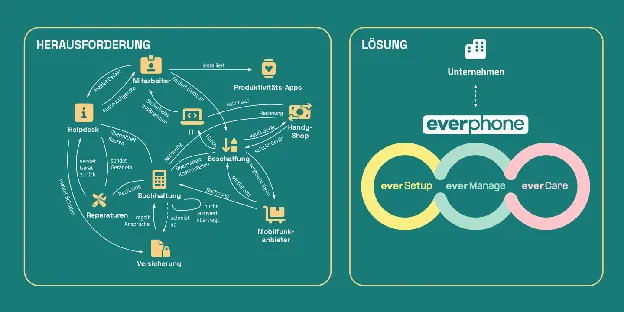
When you own the device, a cracked screen is a ticket with several steps. Someone has to get a replacement device, set it up, arrange the repair and check the invoice. Until the replacement arrives, the employee works without a device.
Or you have to go through the infamous dual-swap scenario: first the broken smartphone is swapped for a replacement (which, of course, has to be set up), only to be swapped back again after the repair. It sounds cumbersome, and it is.
Wiping and disposal are mandatory
A company phone that comes back is full of company data. For smartphones, the IT baseline protection rules of Germany's Federal Office for Information Security (BSI) require that they are encrypted, reset to factory settings and then taken through the setup process.
That sounds like five minutes. In practice, someone has to collect the device and document the wipe. After that, it gets reassigned or disposed of.
If you don't keep a proper record, you'll struggle to prove later that no data was left on the device.
Device as a Service vs. buying devices: a direct comparison
Buying wins on the upfront calculation, Device as a Service on everything that comes after. The table shows who takes care of which task. Feel free to check it with our TCO calculator.
| Task | Buying | Device as a Service with Everphone |
|---|---|---|
| Upfront investment | Full purchase price immediately | None, monthly rent |
| Setup and rollout | Your own IT | Handled by Everphone, including MDM |
| Device damage | Organise repair and replacement yourself | Replacement as part of the service, damage covered by the rent |
| Loss | New device at full price | Current value according to the residual value table |
| Overview of who has which device | Your own list or software | Asset management included |
| Data wiping after return | Do it and document it yourself | Certified wiping at no extra cost |
| End of life | Sell or dispose of | Refurbishment by Everphone, purchase option by arrangement |
And leasing? Leasing is financing. The instalments spread the purchase price, but the work stays with you.
On top of that come costs that often only surface when you return the devices. You'll find them in 9 reasons for excessive smartphone leasing costs. Everphone doesn't lease; it rents out devices with service included.
Worked example: the cost of a company phone you buy
A smartphone you buy costs significantly more per month than simply "purchase price divided by service life". Here's an example with 80 employees, devices at €900 and three years of use.
The other values are assumptions for this example, not market figures. Each year there are twelve joiners and leavers and ten defects.
IT needs 1.5 hours to set up a new device, one hour for a return including wiping, and two hours for a defect with a replacement device. An internal hour costs €60.
| Item | Calculation | Amount |
|---|---|---|
| Devices | 80 × EUR 900 | EUR 72,000 |
| Initial setup | 80 × 1.5 h × EUR 60 | EUR 7,200 |
| Joiners and leavers over three years | 36 × 2.5 h × EUR 60 | EUR 5,400 |
| Labour for defects over three years | 30 × 2 h × EUR 60 | EUR 3,600 |
| Repairs over three years | 30 × EUR 200 | EUR 6,000 |
| Total | EUR 94,200 | |
| Per device per month | EUR 94,200 ÷ 80 ÷ 36 | EUR 32.71 |
The device price alone comes to €25 a month. The work around it adds almost €8 on top.
Not yet included are MDM licences, lost devices and the effort of selling or disposing of devices. You can subtract a residual value if you sell the devices.
Compare this figure with the rent per device per month. Plug in your own numbers. The article on the TCO calculator for company phones shows which items belong in a complete calculation.
Which companies benefit most from Device as a Service
Device as a Service is worth it for companies of every size, from a 20-person business to a large enterprise. It pays off most clearly if at least one of these points applies to your company:
- Lots of joiners and leavers, for example due to growth, seasonal work or project business
- No dedicated IT team, with someone looking after devices on the side
- Employees at several locations or working from home, so devices travel by post
- High-end devices, where every outage costs revenue or customer meetings
- Strict requirements for data protection and proof that data has been wiped
Small companies in particular underestimate the effect. With 30 employees, nobody's job is devices. So someone from office management handles it between two other tasks. Every defect slows that person down.
For companies with up to 250 employees, there's the Everphone shop: choose your devices, order, done. Larger companies sort out their fleet and processes in a short consultation with the Everphone team.
When buying is the better choice
Buying is the better choice when a device hardly creates any work. That's the case when it stays in the same place for years and rarely changes hands.
One example is the tablet mounted next to the meeting room as a room calendar. It's set up once and rarely touched after that. Here, renting means paying for a service you hardly need.
And if you've just bought an entire fleet, you don't have to wait until the devices are old. With buy and rent back, you sell your existing devices and rent them back.
How that works is explained in From capex to opex: renting company phones with buy and rent back.
For everyone else: run the numbers once with real figures. Take last year's number of joiners, leavers and defects and estimate the hours involved. Then you'll see what your devices cost per month.
Frequently asked questions
Is Device as a Service more expensive than buying?
If you only compare purchase price and rent, buying almost always looks cheaper. But the rent includes services you'd otherwise provide yourself, such as replacements, data wiping and asset management. The only fair comparison is total cost per device per month.
Is Device as a Service worth it for small businesses?
Yes. Small businesses rarely have someone whose main job is looking after devices. That's exactly the work renting takes off your hands. For companies with up to 250 employees, there's the Everphone shop.
What happens if a rented device breaks or gets lost?
Everphone replaces a damaged device as part of the service, and the damage is covered by the rent. If a device is lost, its current value according to the residual value table applies, not the new price.
Can I buy the devices at the end of the rental period?
Yes, a purchase option at the end of the term is possible by arrangement. If you return the devices, Everphone wipes them with a certificate and refurbishes them for their next use at no extra cost.
Is Device as a Service the same as leasing?
No. Leasing finances the purchase price, while management, repairs and returns stay with you. With Device as a Service, you rent the devices together with these services.